

What Really Happens Before an Online Prescription
A safe remote patient health assessment is much more than a quick chat and a script. Before any prescription is written through telehealth, a clinician needs a clear picture of your health story, your goals, and your risks. The goal is simple: match the ease of online care with the same safety you would expect from a good in‑person visit.
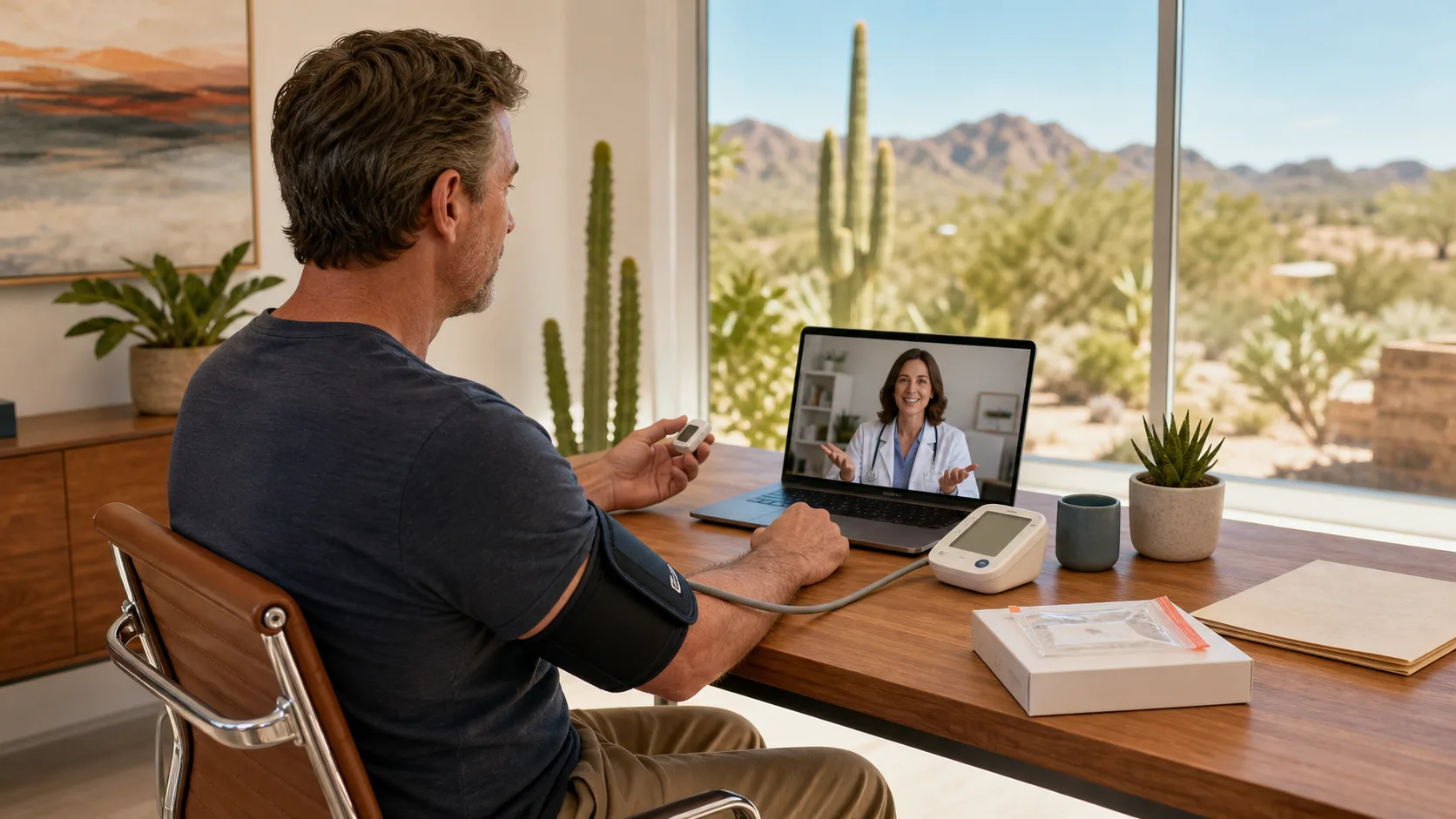
When you meet with us for virtual care, we ask for details about your symptoms, past medical history, current medications, allergies, and family history. It helps if you have a home scale, a blood pressure cuff, and any recent lab results nearby. A thorough visit usually takes longer than people expect, because we slow down, ask careful questions, and leave time for you to ask your own.
In this guide, we walk through what that remote assessment looks like for mental health medications, hormone replacement therapy, thyroid care, GLP‑1 weight loss treatment, and urgent care. Fall and early winter in Arizona can bring more stress, more viruses, and more appointments, so it helps to know what to expect before you log on.
Building a Safe Remote Patient Health Assessment
Across all types of visits, we build from the same base. We want to know not just what hurts today, but how your body and mind have been doing over time.
Key parts of the history include:
- Current symptoms and when they started
- Long-term conditions like diabetes, heart disease, or asthma
- All medications, vitamins, and supplements
- Allergies and past bad reactions to medicines
- Family history of heart issues, cancers, mental health, and thyroid problems
We also ask about your daily life. Stress at work, caregiving, money worries, or lack of sleep can change how your body feels and how treatments work. A short review of other body systems, like your breathing, digestion, or periods, helps us catch things you might not think to mention.
For vitals and home data, we often ask you to check:
- Weight and height so we can calculate BMI
- Blood pressure and heart rate
- Temperature and home oxygen level if you have a pulse oximeter
If a reading looks off, we may ask you to repeat it, use a different device, or get it checked in person. For labs and imaging, we can order tests through local labs and review any records you upload. Sometimes we can begin treatment while we wait for labs, but for certain medicines it is safer to see lab results first.
Mental Health Medications Done Safely Online
When we think about mental health meds like antidepressants, anxiety medicines, or ADHD treatments, a careful history is key. We ask about mood, worry, focus, sleep, appetite, and energy, and how these change around the holidays or during stressful seasons. We review any past diagnoses, what you have taken before, what helped, and what caused side effects. Substance use, trauma history, and any past self‑harm or hospital stays also matter.
During a video visit, we pay attention to:
- Appearance and behavior, including how you move and respond
- Speech, mood, and emotional expression
- Thought process, such as racing thoughts or confused thinking
- Memory, focus, insight, and judgment
We may use simple screening tools like PHQ‑9 for depression or GAD‑7 for anxiety. When you also work with a therapist, we try to keep treatment plans aligned so you are not getting mixed advice.
There are times when online care is not enough on its own. We look closely for red flags such as:
- Active suicidal or homicidal thoughts with a plan or intent
- Signs of psychosis, like hearing voices or strong paranoid beliefs
- Severe mania with unsafe behavior
- Hard alcohol or drug withdrawal symptoms
In those cases, we direct people to in‑person or emergency care before any new prescription. Pregnancy, complex medical problems, or risky drug interactions may also lead us to refer you for local care.
Hormones, Thyroid, and Labs That Must Come First
Hormone replacement therapy and thyroid management depend heavily on lab work. For HRT, we talk about menopausal symptoms like hot flashes, night sweats, mood swings, or sleep trouble, as well as andropause concerns like low energy, low libido, or muscle loss. We review menstrual and reproductive history, past surgeries, and any history of breast, uterine, ovarian, or prostate cancer, blood clots, or stroke. As days get shorter, people often feel more fatigue and mood changes, so fall check‑ins can be helpful.
Typical vitals and labs for HRT and thyroid care include:
- Blood pressure and BMI
- Baseline cholesterol numbers and liver tests
- Hematocrit and PSA for some testosterone plans
- Thyroid tests like TSH and free T4, sometimes T3 or thyroid antibodies
We also review every medication and supplement that can affect thyroid levels or hormones. Some situations are not right for telehealth hormone starts, such as:
- Unexplained vaginal bleeding
- Known or strongly suspected hormone‑sensitive cancer
- Past blood clots, stroke, or severe uncontrolled heart disease
- New neck masses, trouble swallowing, or breathing with suspected thyroid pressure
- Very abnormal thyroid labs that might need imaging or a specialist
In those cases, we discuss the findings with you and recommend in‑person exams or referrals before changing hormones.
GLP‑1 Weight Loss Care and Urgent Telehealth Triage
GLP‑1 medicines for weight loss require careful screening. We ask about your weight history, what you have tried before, and how weight has affected your health. We review personal and family history of medullary thyroid cancer or MEN2, past pancreatitis or gallbladder problems, kidney issues, and pregnancy or fertility plans. We also talk about your relationship with food and your body, since emotional health is part of safe weight care.
Before starting GLP‑1 treatment, we usually gather:
- Weight, BMI, and sometimes waist size
- Blood pressure and heart rate
- A1C and fasting blood sugar
- Kidney and liver function tests
- Cholesterol panels
We create a clear plan for how to raise doses slowly and what side effects to watch for, like strong nausea, stomach pain, or signs of low blood sugar. Some symptoms mean we should pause or stop the medicine and get in‑person evaluation.
For urgent care visits, remote triage matters a lot. Common seasonal issues include:
- Coughs, sore throats, sinus congestion, and ear pain
- Suspected flu or COVID‑19
- Short stomach bugs with nausea, vomiting, or diarrhea
During telehealth urgent care, we ask targeted red‑flag questions. For chest pain, trouble breathing, weakness, confusion, very high fever, severe abdominal pain, or new neurological changes, we recommend urgent in‑person or ER care instead of trying to treat only online.
Turning Your Online Visit Into a Safer, Faster Outcome
You can make your remote patient health assessment smoother with a little planning. Before your visit, it helps to:
- Have your ID and an updated medication list ready
- Take home vitals like weight, blood pressure, and temperature
- Upload or have access to recent labs or imaging
- Jot down your symptoms, when they started, and what makes them better or worse
- Take clear photos of rashes or visible problems if needed
As fall and the holiday season approach, stress, travel, and germs can pile up at once. Planning ahead for mental health check‑ins, thyroid reviews, HRT follow-ups, and GLP‑1 monitoring can keep you steady when life gets busy. Telehealth makes it easier to stay on track even when you are out of town, busy with family events, or trying to avoid crowded waiting rooms during cold and flu season.
At Arizona Telehealth Services, we aim to make each online visit feel thorough, personal, and safe, whether we are supporting weight loss, hormones, mental health, ongoing primary care, or urgent needs. When a problem would be better handled in person, we see that as part of good telehealth care too, helping guide you toward the right level of support instead of leaving you to figure it out alone.
Take Control Of Your Health From The Comfort Of Home
If you are ready to manage chronic conditions more confidently between office visits, we can help you get started with a convenient remote patient health assessment. Our clinicians at Arizona Telehealth Services use secure virtual tools to track your symptoms, review medications, and adjust your care plan in real time. We work with you and your existing providers so your care feels coordinated, not fragmented. If you have questions before getting started, please contact us for more information.