

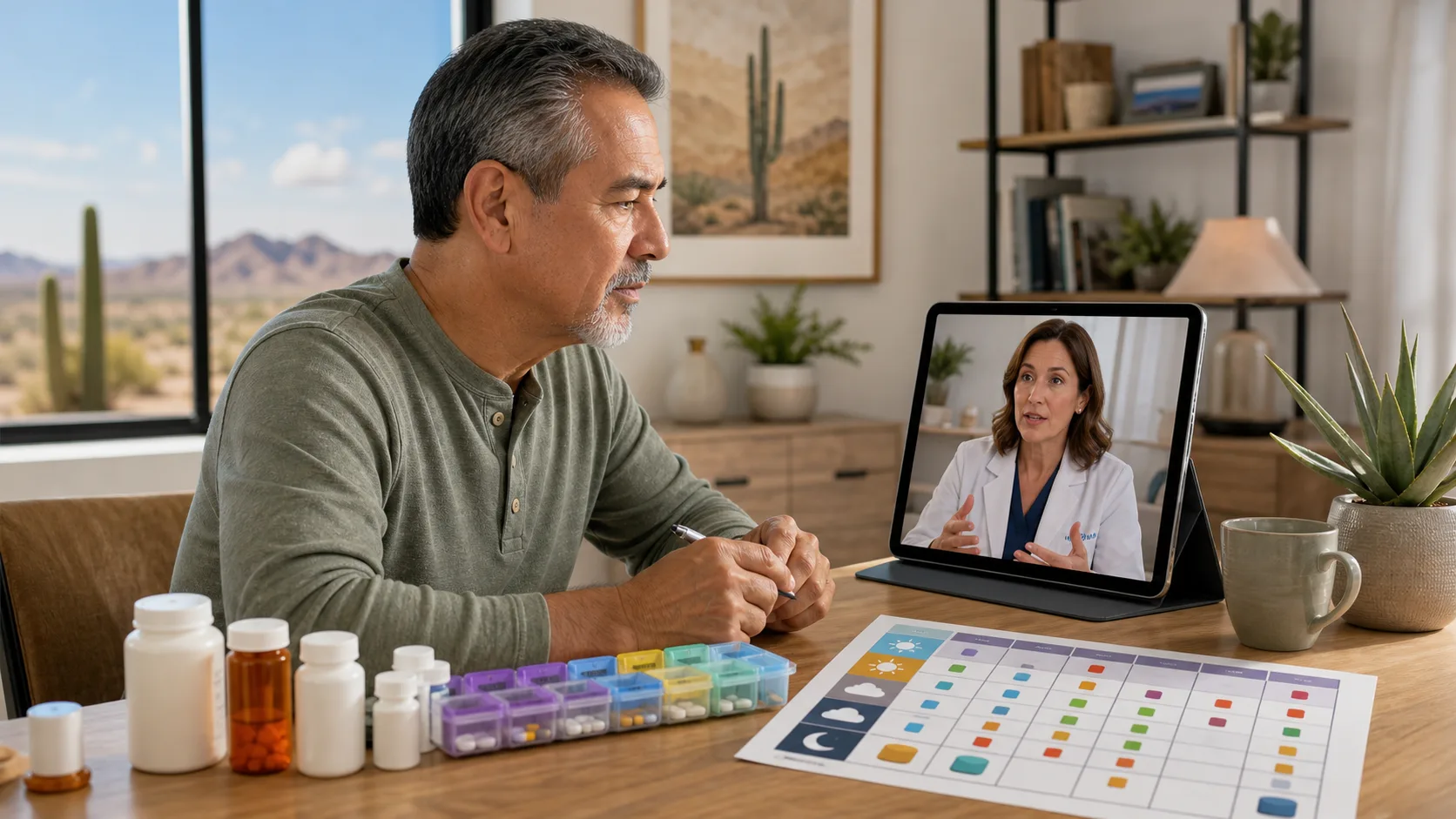
A long medication list does not automatically close the door on new treatment options. If you are considering a low-dose naltrexone online prescription, the right first step is a careful review of what you already take, why you take it, and what you hope a new treatment may support.
Holiday plans can make this feel even more pressing. Travel, family gatherings, refill timing, and changing routines may raise fair questions about side effects, overlapping prescriptions, and keeping every provider on the same page. We believe a thoughtful plan is far better than adding a medication quickly.
A Clearer Path Through Medication Decisions
At Arizona Telehealth Services, we use personalized virtual care to discuss your health needs, current treatments, and possible options with a licensed provider. An online visit can be a convenient starting point, but it is still a medical evaluation, not a quick prescription form.
Low-dose naltrexone is not a one-size-fits-all treatment. Before considering it, we need to understand whether you use prescription pain medicine, mental health medications, hormone therapy, weight-management treatments, or other therapies that may affect the plan. Your health history, goals, and current medications all matter.
The point is not to make your medication list shorter or longer. It is to make sure every treatment has a purpose and fits safely with the rest of your care.
A Complete Medication Review Gives Us the Full Picture
A medication review involves more than daily prescriptions. Many products that seem minor, such as allergy medicine, sleep aids, vitamins, or herbal supplements, can still matter when a provider is reviewing your treatment plan.
Before a virtual appointment, we recommend gathering details such as:
- Medication names, doses, and how often you take them
- The clinician who prescribed each medication and the reason for use
- Over-the-counter products, supplements, vitamins, and herbal remedies
- Any medication you use only as needed, including cough or pain medicine
- Recent medication starts, stops, or dose changes
Recent changes deserve special attention. A medication that was added last week, discontinued recently, or used only during flare-ups may influence whether low-dose naltrexone is appropriate now or should be considered later.
We also need relevant health information. Liver concerns, past medication reactions, substance-use history, chronic pain treatment, planned procedures, and pregnancy or breastfeeding considerations can all shape a provider’s recommendation. Telehealth makes these discussions easier to access from home, but accurate information remains the foundation of safe care. When needed, we may also ask for permission to coordinate with other members of your care team.
How We Evaluate Low-Dose Naltrexone
Naltrexone has established clinical uses. When prescribed at low doses for certain purposes, its use and formulation may be based on a provider’s clinical judgment and may be off-label. That means the decision should be personal, careful, and based on your full clinical picture.
During an evaluation, we may ask about your symptoms, diagnoses, past treatments, medication goals, and experiences with naltrexone or similar therapies. A short questionnaire alone cannot always tell us enough. The details help us weigh possible benefits, limits, and safety concerns.
Opioid use requires especially careful review. Naltrexone can block opioid effects and may trigger serious withdrawal for people currently using or recently using opioids. This can include certain prescription pain medications, cough medications, and treatments used for opioid-use disorder. Never stop, reduce, or change a pain medication on your own to prepare for a low-dose naltrexone online prescription. The clinician managing your pain care should guide those decisions.
In some cases, virtual care may be appropriate. In others, we may recommend follow-up discussions, pharmacy coordination, testing, an in-person evaluation, or specialist input before treatment begins.
Interactions and Health Factors That Need Extra Attention
No online article can provide a complete interaction list for every person. Medication risks depend on the dose, timing, health conditions, and the full combination of treatments you use. Openness with your provider helps us spot concerns early.
A closer review may be needed for:
- Opioid-containing pain or cough medications
- Planned dental work, surgery, or emergency pain-management needs
- Weight-management products that already contain naltrexone with bupropion
- Liver health concerns or alcohol use
- Mood, sleep, or mental health changes
Duplicate therapy is one concern that can be easy to miss. Some weight-management products already contain naltrexone, so taking another form without a full review could lead to unintended overlap.
Mood and sleep also deserve attention, especially if you have a complex mental health treatment plan. New or worsening symptoms should be reported promptly instead of being brushed off as something you simply have to “wait out.”
Aligning LDN with Your Other Health Goals
Many people manage more than one health priority at a time. We provide care related to GLP-1 weight loss drugs, hormone replacement therapy, ketamine therapy, mental health therapy, life coaching, and low-dose naltrexone. These services should work together as parts of a larger plan, not as isolated prescriptions.
GLP-1 weight-management medications or hormone replacement therapy may not automatically prevent low-dose naltrexone treatment. Still, we should review medication timing, side effects, nutrition, hydration, weight changes, energy levels, and your overall goals before making recommendations.
Coordination matters just as much for ketamine therapy and mental health therapy. A prescriber needs to understand your therapy plan, psychiatric medications, mental wellness goals, and any history of medication-related mood or sleep changes. Life coaching and regular follow-up can also support realistic routines around stress, sleep, nutrition, medication adherence, and communication with your care team.
Plan Follow-up Before Holiday Routines Shift
November can be a helpful time to plan ahead. Holiday travel, pharmacy hours, family events, and insurance questions can make it harder to manage several medications without a clear plan. Before starting or changing treatment, make sure you understand when follow-up will happen, what symptoms to report, whether monitoring or laboratory work may be needed, and how refills will be handled during travel.
A personalized virtual medication review can help bring those details into focus. Bring your complete medication list, recent health information, and questions about your treatment goals. A safe medication plan should give you clear instructions, realistic expectations, and a clear understanding of when urgent medical care may be needed.
Get Support for Your Medication Questions
At Arizona Telehealth Services, we can help you discuss whether a low-dose naltrexone online prescription may align with your individual needs. Our team takes the time to review your concerns and help you prepare for an informed conversation about treatment options. If you have questions before getting started, contact us for guidance.