

When Virtual Ketamine Is Not Enough Anymore: What to Do Next
Virtual ketamine can be a helpful tool for PTSD. It allows people to get treatment from home with a licensed provider guiding each step. Many choose online care because it fits busy schedules, offers privacy, and is easier to access across Arizona, from big cities to smaller towns, with clear, upfront pricing.
But sometimes, even when we follow the plan, symptoms do not keep improving. Some people plateau, start to slip backward, or notice new PTSD symptoms as stress builds. This can be especially tough as fall rolls in, days get shorter, and holiday triggers start popping up in October. Our goal here is to talk about what to do next: how to build a step-up care plan that goes beyond just switching to in-clinic ketamine, using therapy, medications, and clear referral points.
Recognizing When PTSD Is Worsening After Ketamine
PTSD can shift over time, and it is important to notice when things are getting worse, not better. After a series of virtual ketamine sessions, some warning signs that PTSD is not improving include:
- Nightmares getting more frequent or more intense
- Stronger flashbacks or feeling pulled into the past
- Avoiding people, places, or tasks more than before
- Feeling jumpy or on edge at small sounds or movements
- Episodes of zoning out or feeling unreal (dissociation)
- Thoughts of self-harm or wishing you were not here
- Using more alcohol, pills, or other substances to cope
Tracking symptoms makes it easier to see patterns instead of guessing based on one hard day. Simple tools can help, such as:
- Weekly check-ins with a provider to review mood and sleep
- Short PTSD symptom scales filled out every week or two
- A basic sleep log to note bedtime, wakeups, nightmares, and morning mood
This kind of tracking matters even more as the seasons change. Shorter days in the fall, colder evenings, and holiday stress can push PTSD symptoms higher, especially in October and the months that follow.
Some signs are true safety red flags and need urgent care right away, such as:
- Clear plans or intent to end your life
- Hearing voices or seeing things others do not, or strong paranoia
- Not being able to eat, drink, bathe, or get out of bed for basic needs
Other signs are less urgent, but they still tell us the current plan is not enough. This might look like slow but steady withdrawal from friends, more sick days at work, or grades slipping at school. These changes signal it is time to step up care, not wait and hope it passes.
Building a Step-up Therapy Plan Around Virtual Care
When virtual ketamine is part of care for PTSD, adding the right therapy can make a big difference. Evidence-based therapies that often fit well include:
- Trauma-focused CBT, which helps you notice and change unhelpful thoughts
- EMDR, which uses guided eye movements or taps while processing trauma
- Prolonged exposure, which helps you face feared memories and reminders safely
- Cognitive processing therapy, which works with beliefs about safety, trust, blame, and control
Many people find that ketamine sessions can make it a bit easier to touch painful memories, feel emotions, and stay present in therapy. The goal is not to push too fast, but to use that window to work on healing skills with a trained therapist.
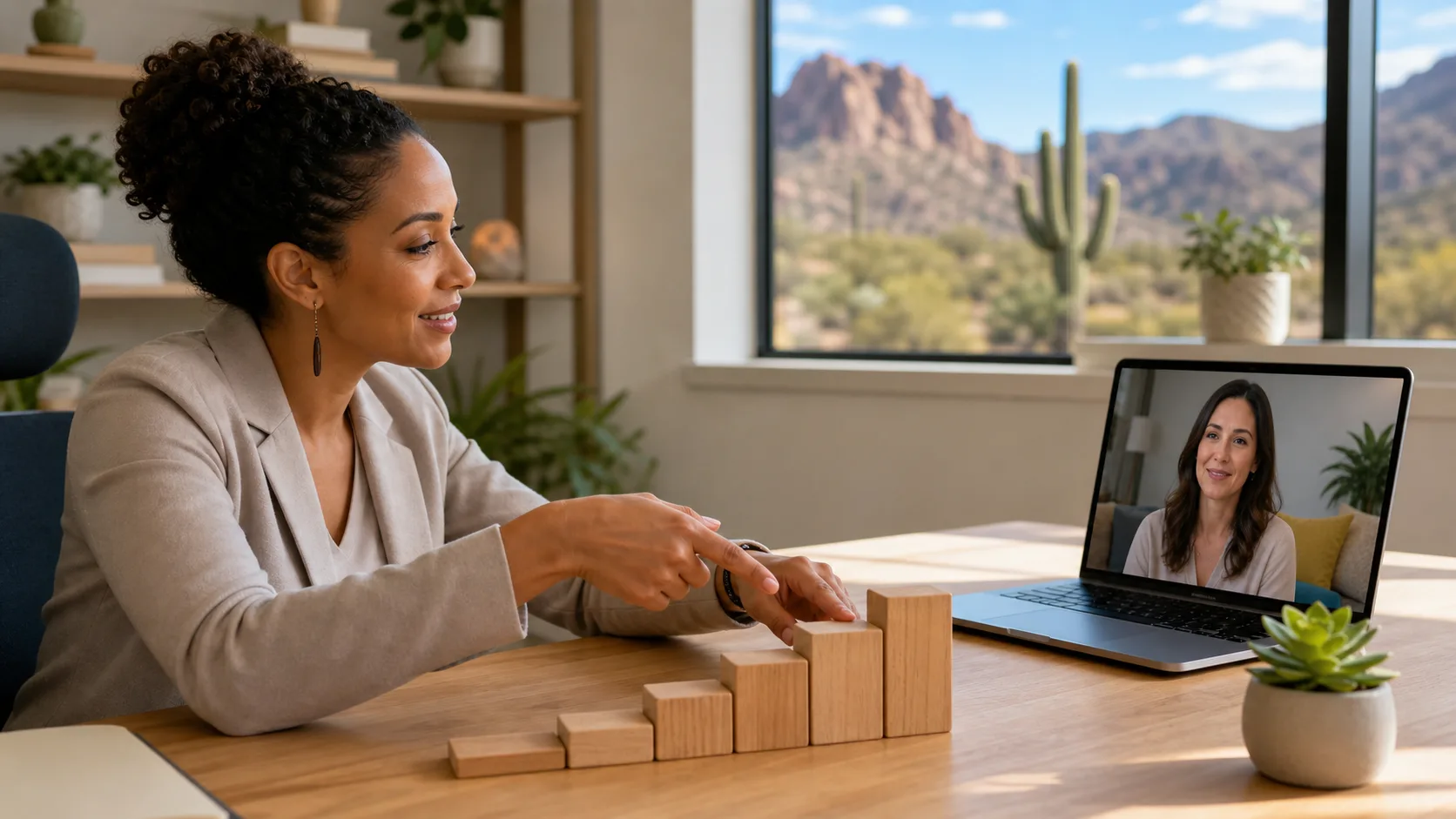
We can also step up therapy intensity in stages, instead of jumping straight to in-person programs. A plan might move from:
- Weekly teletherapy focused on trauma and coping
- To twice-weekly sessions during tougher seasons
- To adding virtual group therapy for support and connection
- To skills-focused programs like CBT-I for insomnia or DBT skills for emotion regulation
Coordinated care is key. A strong telehealth team can include a psychiatric provider managing ketamine and medications, a therapist focusing on PTSD, and a primary care provider watching overall health. Together, they can share a care plan that names likely hard times, like the winter holidays, travel, or family gatherings, and then build extra support around those dates.
Considering Medication Adjustments Beyond Ketamine
When PTSD is not responding how we hoped, it is normal for a licensed provider to step back and look at the full medication picture, not just ketamine. This often means reviewing:
- Current SSRI or SNRI medications for mood and anxiety
- Options like prazosin to target trauma-related nightmares
- Non-habit-forming sleep aids if insomnia is a major issue
- Mood stabilizers or other medications when there are big mood swings
Ketamine is one piece of a larger strategy, not the whole plan by itself. A provider might suggest changing how often ketamine sessions happen, adding a maintenance schedule, or even pausing ketamine for a bit while adjusting first-line PTSD medications. It is very important not to change doses on your own or mix other substances with ketamine without medical guidance, since that can increase risk and confuse the symptom picture.
Comprehensive online medication management can also look beyond the brain. Lab work and health checks can help rule out other issues that may worsen PTSD symptoms, like thyroid problems, sleep apnea, or hormone imbalance. When psychiatric care and primary care are coordinated, it is easier to see the full story behind mood, energy, and sleep changes.
When to Escalate Care or Refer to Higher Support
Sometimes, even after adjusting therapy and medications, PTSD symptoms keep getting worse or more risky. At that point, it helps to have clear referral triggers that mean it is time for higher support. These might include:
- Repeated intense dissociation after ketamine sessions
- Falling performance or attendance at work or school
- Rising alcohol or drug use to get through the day
- Risky behaviors like unsafe driving, unsafe sex, or aggressive outbursts
There are different ways to step up care, each with its own level of structure and support:
- Switching to in-clinic ketamine, where monitoring is in person
- Intensive outpatient programs, with several therapy hours on multiple days each week
- Partial hospitalization programs, with full-day treatment but nights at home
- Residential trauma treatment, where you live at a treatment center
- Hospital care, often short-term, for safety and stabilization
Virtual providers can help sort out which level fits your needs and can work with in-person teams to share history, medication plans, and PTSD goals. Even when someone needs a period of higher in-person care, effective ketamine therapy online for PTSD may still play a role later on. With clear communication and planning, virtual ketamine can continue as part of long-term maintenance after the most intense phase of treatment has passed.
Creating Your Personalized PTSD Recovery Roadmap
A clear, written plan can make PTSD recovery feel less confusing and more in your control. Patients and families can work with Arizona Telehealth Services to build a step-up roadmap that includes:
- Specific symptom goals, like fewer nightmares or less avoidance
- A regular therapy schedule and backup options for harder weeks
- Planned times to review medications and lab results
- Clear referral thresholds, such as what will trigger a shift to higher care
Helpful next steps often include preparing brief symptom notes before visits, talking with your provider about upcoming fall and holiday triggers, and asking about options for coordinated therapy and safety planning. Writing things down keeps everyone on the same page when stress is high.
Virtual ketamine is a tool, not the whole toolbox. With a thoughtful step-up strategy, a connected telehealth team, and a plan that expects ups and downs, people with PTSD can move from feeling stuck to a more steady and sustainable recovery path.
Take The Next Step Toward Lasting PTSD Relief
If you are ready to explore how our care team at Arizona Telehealth Services can support your healing, start by learning more about our effective ketamine therapy online for PTSD. We provide personalized treatment plans in a secure telehealth setting so you can access care from the comfort of your home. To ask questions or schedule your first appointment, please contact us today.